Friday, May 19, 2023

Show HN: Midjourney-Python-API https://ift.tt/prYc1ka

Show HN: Midjourney-Python-API This Python client is built for the unofficial MidJourney API, leveraging a Discord self bot and utilizing the Merubokkusu/Discord-S.C.U.M library. Please be mindful that there might be risks associated with the use of self bots, as per issue #66. Key Features: 1: Info retrieval 2: Imagine prompt 3: Image upscale and vectorization by label 4: All message returns via WebSocket, including banned words check and image processing 5: Auto reconnect WebSocket https://ift.tt/DWsvtja May 19, 2023 at 07:36AM

Show HN: Lunchtoast – a CLI tool for functional testing of console applications https://ift.tt/E6Um3yZ

Show HN: Lunchtoast – a CLI tool for functional testing of console applications It helps to create tests that check program output with a simple test description format. It's written in C++20 and works on Windows and Linux. https://ift.tt/Y5OkjzQ May 19, 2023 at 03:58AM

Show HN: Playtext – Turn articles into audiobooks and read 2x faster https://ift.tt/EXiQgz6

Show HN: Playtext – Turn articles into audiobooks and read 2x faster https://playtext.app May 18, 2023 at 09:50PM

Show HN: PAKman – A new build system built around Alpine Linux Packages https://ift.tt/CIiZpkm

Show HN: PAKman – A new build system built around Alpine Linux Packages https://ift.tt/yN63wof May 16, 2023 at 07:53PM

Bike to Wherever Day

Bike to Wherever Day
By

Join people across the city bicycling today for the annual Bike to Wherever Day. The SFMTA is proud to be the official citywide sponsor of Bike to Wherever Day 2023, San Francisco's favorite biking celebration!   
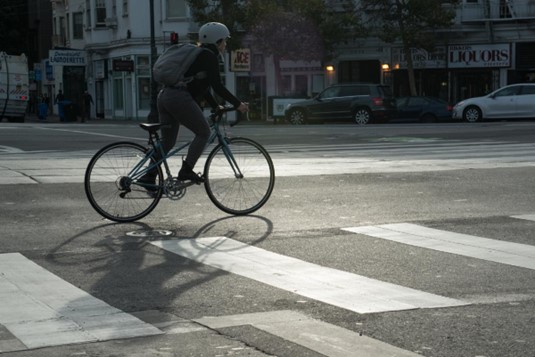
A bicyclist with a backpack and helmet is seen in the street adjacent to a crosswalk.

Hosted by the San Francisco Bicycle Coalition, Bike to Wherever Day celebrates  bicycles as a fun and healthy way to get around. This annual event invites people to pedal to their destinations, and it promotes bicycling both as an alternative commute and as a healthy and safe alternative to driving to…wherever. 

We encourage everyone, including those who don't usually bike, to get out and cycle today. After grabbing some wheels  (your own or a bikeshare bike), consider joining one of the Neighborhood Rides. Need more reason to stop by? You also can pick up your free Bike to Wherever Day canvas tote bag, filled with goodies, courtesy of the SF Bicycle Coalition. 

Resources to Help You Plan Your Bicycle Trip 

The SFMTA has go-to resources to help you plan your bicycle trips.  The interactive bike network map highlights recommended routes and shows bikeshare station locations. Go to our Get Out, Get Going website  to find an interactive multi-mode map with information about other sustainable ways to get around that you could pair with your bicycle trip, including walking and using shared mobility devices, like a scooter or moped.   

The SFMTA supports low-carbon transportation options like bicycles, and we continue to expand our dedicated bike lanes around the city to make streets safer and more comfortable for bicycling.  

You can check out our Slow Streets Program with over 18 corridors  that have traffic limitations so they can be used as shared spaces with walkers and bicyclists. Biking, scooting and rolling  are integral to our new Active Communities Plan, a 2-year process to develop a plan for active mobility in San Francisco.  For more information, visit the project website (SFMTA.com/ActiveCommunities).  


Published May 19, 2023 at 02:50AM
https://ift.tt/s2cFGH4

Show HN: Jesth – Next-level human-readable data serialization format https://ift.tt/r0FJsNl

Show HN: Jesth – Next-level human-readable data serialization format Hi HN ! I'm Alex, a tech enthusiast. I'm excited to show you Jesth, a next-level human-readable data serialization format. This project started out as a markup language for writing the docstrings of functions that would ultimately be consumed by a documentation generator. Basically the idea was to split a docstring into sections like Description and Parameters. Each section would consist of a header in square brackets and a body (lines of text between two headers). Here's what a docstring for a sum function would look like: This function takes in two integers a and b and returns their sum. [parameters] - a: First integer - b: Second integer [return] Sum of a and b The Description section in the example above is actually an anonymous section, i.e., a section with an empty header. Meanwhile, I was thinking of a way to automate part of my dev workflow by storing in a file commands grouped into tasks such as project creation, build, testing, release, et cetera. Similarly with the markup language for my documentation generator, I would use square brackets to define the tasks. Thus, a task would consist of a header and a body which would be a list of commands to be executed sequentially. I built this project and named it Backstage. Here is a hypothetical backstage.tasks file: [release] & test & generate_doc & git_stuff & build # upload to PyPI $ twine upload --skip-existing dist/* [git_stuff] $ git add . $ git commit -m {message} $ git push origin master The example above is illustrative only and would not work. It contains 2 sections "release" and "git_stuff". Running the "release" task from the command line is equivalent to sequentially executing the commands in the "release" section. The documentation generator and the scripting language, despite the obvious similarity in their formats, did not share any parsing code. So, to stop repeating myself, I created a file format and its library named Jesth which stands for "Just Extract Sections Then Hack". The library acts as an incomplete INI file parser that only hands the programmer the sections (as headers and their associated bodies which are lists of strings). No further interpretation of the data is done by the parser, allowing the programmer to unleash their creativity through useful hacks. In its latest iteration, Jesth has matured and also includes a proper and extensively tested hack to convert a compatible section into a dictionary data structure, making Jesth my de facto preferred format for config files. I find Jesth more readable than TOML, YAML, and JSON. Here, encoding a dictionary data structure in its own section with another section containing a prompt for ChatGPT: [prompt] I want you to act as a detective story writer. I will provide you with two dictionary data structures representing the profiles of two people. Your goal is to write a thrilling neo-noir story. My first request is: "guess who the killer and victim is from the profiles, then build a story that includes every detail of the profiles". [profile] # This section can be converted into a dictionary data structure name = 'Jane Doe' birthday = 2000-12-23Z10:17:37Z photo_jpg = (bin) VGhpcyBpcyBub3QgYSBwaG90by4uLiBCdXQgdGhhbmsgeW91 IGZvciB5b3VyIGludGVsbGVjdHVhbCBjdXJpb3NpdHkgOyk= --- books = (dict) romance = (list) 'Happy Place' 'Romantic Comedy' sci-fi = (list) 'Dune' 'Neuromancer' epitaph = (text) According to the law of conservation of energy, no a bit of you is gone; you are just less orderly. --- [profile] name = 'John Doe' birthday = null books = (list) 'American Predator' 'Mindhunter: Inside the FBI's Elite Serial Crime Unit' You can learn more by reading the project's README and playing with the demo. Let me know what you think of this project. https://ift.tt/WUjhpIo May 18, 2023 at 10:38PM

Thursday, May 18, 2023

Show HN: Do not chat with your pdfs alone. Let others join the fun too https://ift.tt/EuyifFp

Show HN: Do not chat with your pdfs alone. Let others join the fun too https://ift.tt/QlL4OcS May 18, 2023 at 02:31PM

Show HN: Free OSS transcription app I made and found it's faster than wispr flow https://ift.tt/jXQh9Tk

Show HN: Free OSS transcription app I made and found it's faster than wispr flow title doesn't let nuance, ofc it's not the app ...